Noticing God in Nature
For me, God is in Nature, is Nature, breathing life into all things animate and bestowing beauty on the inanimate. Spending time out in the natural world, walking in the woods, the hills or the park, gardening, or just walking to the shops noticing the plants growing in front gardens or the grass verges, all these offer a chance to connect with Nature. Noticing is vital. We can drift past beautiful plants or stunning landscapes with our minds preoccupied with problems or fantasies and we might just as well have been walking through underground tunnels. We have to actively participate in the connection to Nature, to God.
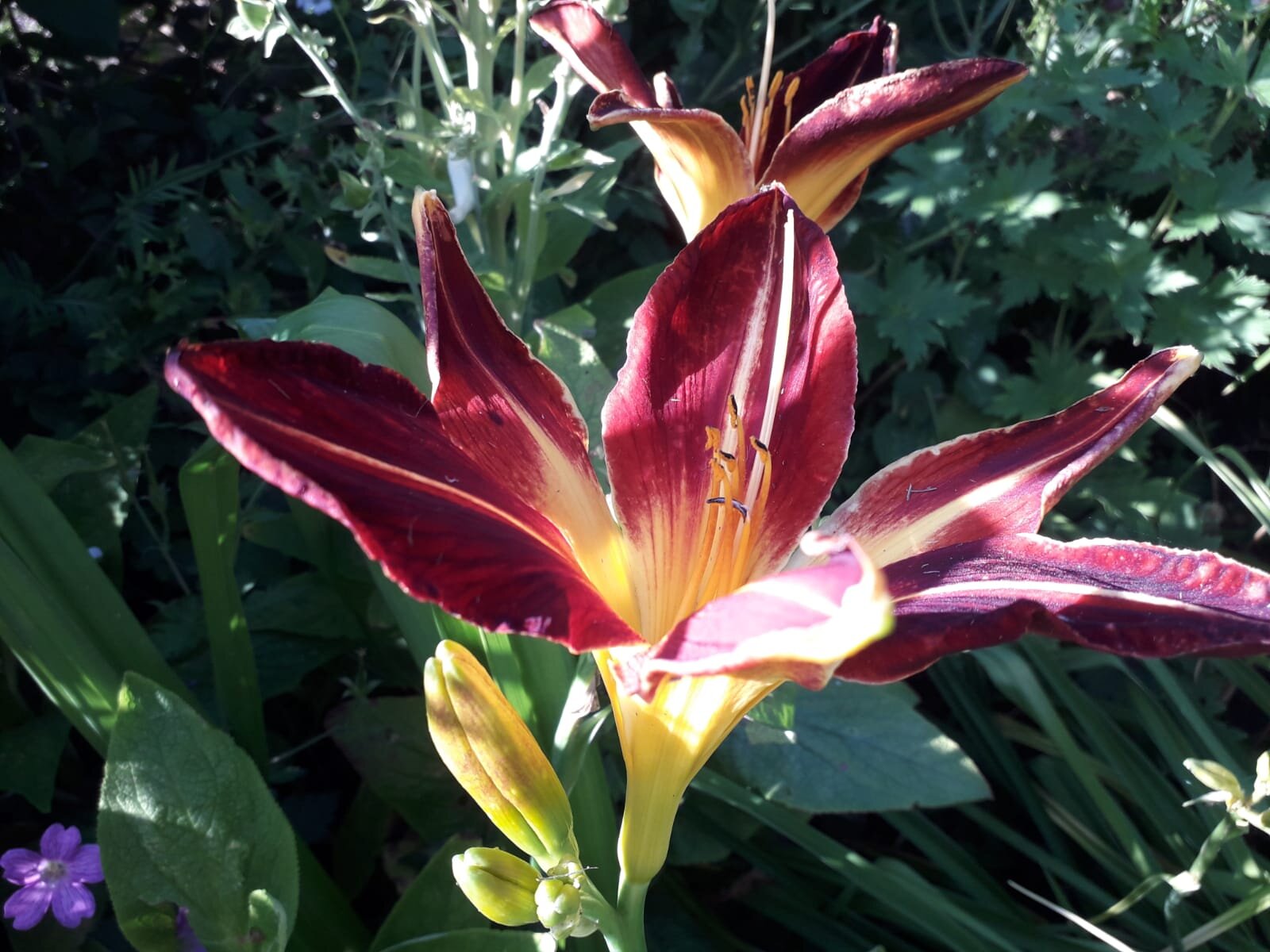
When working in the Hamblin garden you are immersed in Nature and beauty: of individual flowers or leaves, of grand, mature trees, of flickering birdsong. So many sights and sounds to take your breath away. In those moments, as dappled light caresses the silk petals of an opening rose, or a bumblebee romps and staggers in the pollen of bright golden stamens, there are no words. Language has its limitations. Those sensations, impressions, perceptions of the sublime take you by surprise and lift you up somehow out of your internal reverie and into a different, nameless consciousness, even if only for a few seconds. In those moments your soul is touched and nourished.
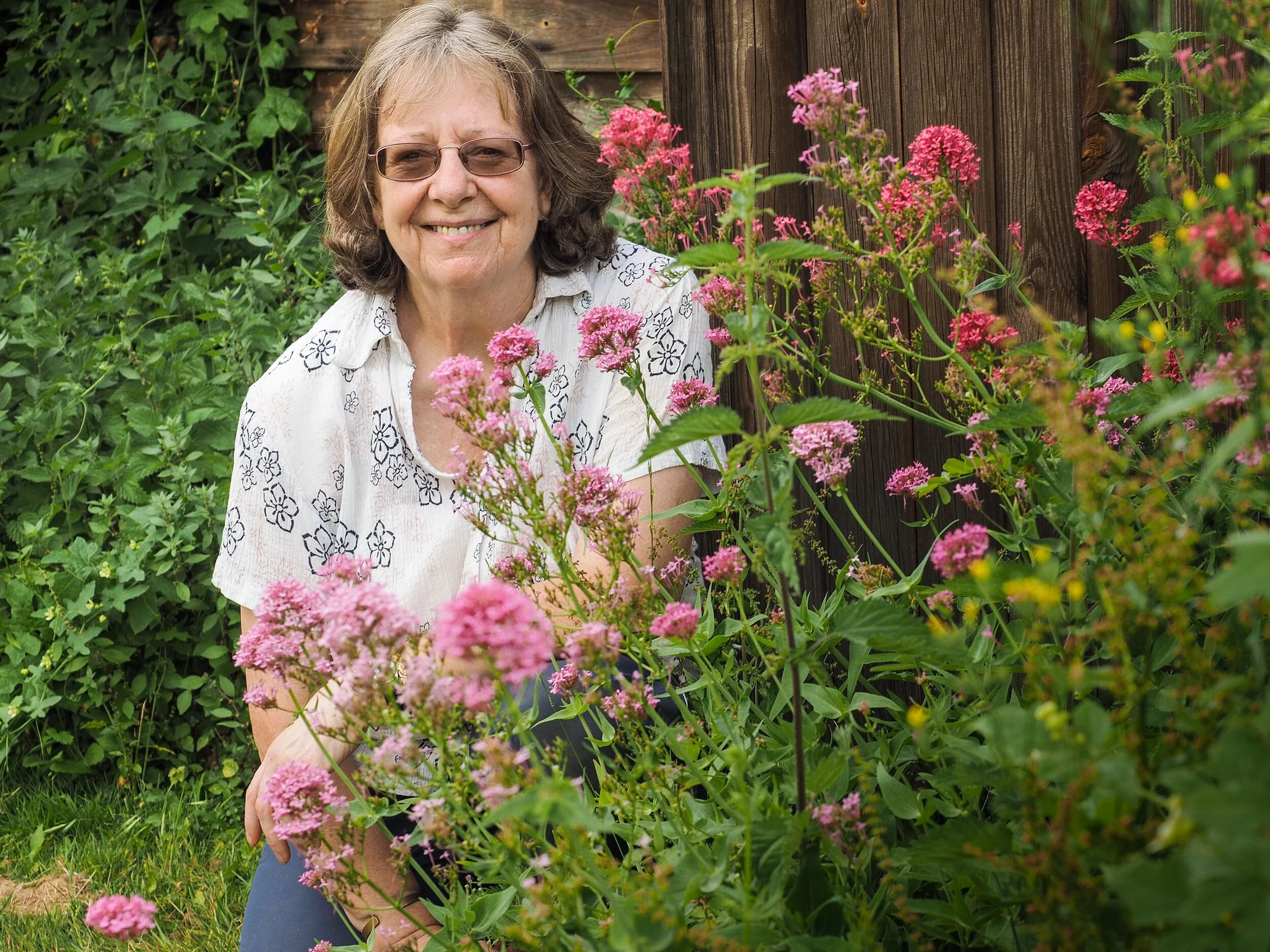
Sue Attridge in her beloved Hamblin Garden
There are some huge oak trees in the Hamblin grounds. Oak trees seem to embody much of what we as individuals, as well as our national identity, aspire to. Holding an acorn in my hand, I have wondered if, prior to falling from its cup, it had had some awareness of its fellow acorns, of the leaves, of the liquid xylem and phloem flowing up and down beneath the bark, carrying life around the tree.
From there I’ve wondered whether an individual cell, located somewhere in my left hand holding the acorn, has any awareness of other cells nearby or, further across the galaxy, in my left elbow or, a universe away, in my right foot. And would that cell be conscious of being a part of a huge organism – me? And that while I recognise it as being a part of me, I am not aware of it as an individual cell? Its fate, as an individual cell, is of no conscious concern to me unless it causes me pain or discomfort. And yet it’s a part of me and I wish it well. Maybe I’m God to that individual cell.
Unlike ( probably) that cell, we, as individuals within the organism of our natural world, with our thinking brains, consciousness and self awareness, can recognise that we are a part of Nature, of God; that Nature and God flow through us, even though for much of our brief lives we choose to ignore that, distracted by our ‘things’ and the exigencies of everyday existence.
Having retired from work in the Hamblin garden, I will miss the enveloping presence of Nature and the abundance of ever present beauty to notice and connect me to God. It was so easy. But the natural world is all around, and now I have more time to notice and cherish it in my own garden and when I’m out taking nourishing walks.
Sue Attridge, March 2021
This blog post is taken from our membership magazine Hamblin Vision winter 2020-21 issue. If you enjoyed reading this article, please consider becoming a member from as little as £3 per month, to receive at least one inspirational article per fortnight emailed to you. By membership of the Hamblin Trust, you are playing your part in helping to create a more peaceful world on both the inner and the outer level. By integrating practical spirituality into everyday life, you are continuing the legacy of the work of Henry Thomas Hamblin.
If you are interested in Henry Thomas Hamblin’s teachings on God in Nature, the much-loved title The Message of a Flower is the place to start. You may also listen to audio recordings of each chapter.